
T20 World Cup Controversy: Rights, Fairness, and the PCB’s Decision Delay
The ICC Men’s T20 World Cup 2026 was supposed to be a celebration of cricket — uniting nations, cultures, and millions of fans worldwide. But a deepening dispute involving the Bangladesh Cricket Board (BCB), the Pakistan Cricket Board (PCB), and the International Cricket Council (ICC) has transformed what should have been a sporting festival into a flashpoint for questions about fairness, human rights principles, governance, and political pressures in international sports administration.
At the heart of this controversy are allegations of unequal treatment, security concerns, nation-to-nation tensions, and the delayed decision by the PCB on Pakistan’s participation — raising far-reaching implications for the sport’s integrity and the rights of athletes and supporters alike.
1. The Spark – Bangladesh’s Exclusion and Scotland’s Inclusion
The immediate source of the controversy was Bangladesh’s stance on traveling to India for their scheduled T20 World Cup matches. Citing security concerns and rising diplomatic tensions, Bangladesh announced it would not travel to India to play its matches. The BCB requested that their games be shifted to Sri Lanka, a co-host of the tournament and a neutral venue.
However, the ICC rejected this request, stating that its security assessments concluded no credible or verifiable threat to the safety of the Bangladesh team, officials, or supporters in India.
When Bangladesh did not confirm participation within the ICC’s deadline, the world governing body removed Bangladesh from the tournament and named Scotland as their replacement.
Scotland, currently the highest-ranked team not originally qualified, accepted the invitation and prepared to compete, though its national leadership acknowledged the unusual, “far from ideal” circumstances.
 2. PCB’s Response – Doubt, Delay, and Diplomatic Calculus
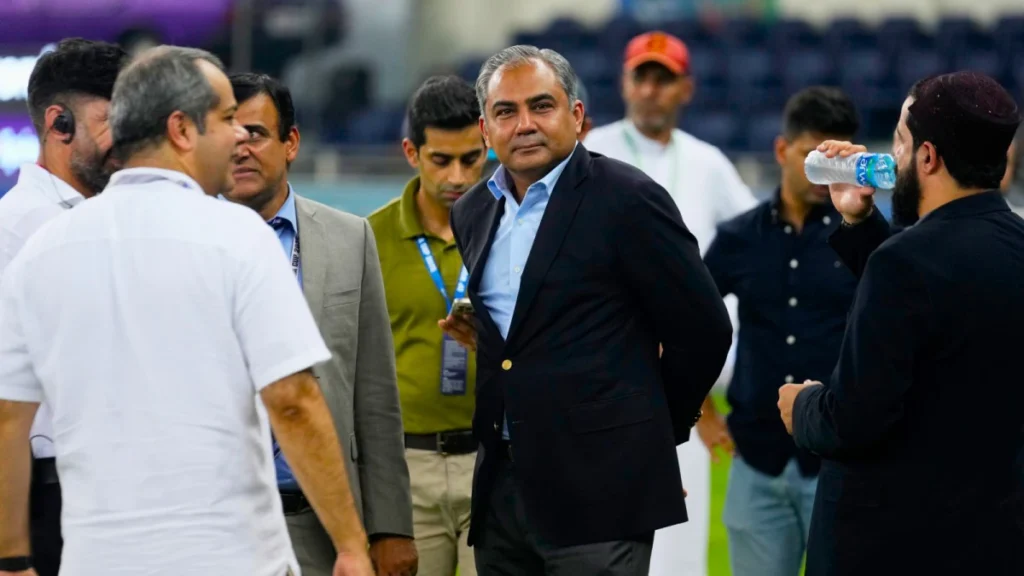
Almost immediately, the PCB criticized the ICC’s handling of Bangladesh’s situation, asserting that Bangladesh was treated unfairly, and that double standards were at play. PCB Chairman Mohsin Naqvi publicly questioned why flexible arrangements were made in the past for other nations but not for Bangladesh, calling the exclusion “injustice” and an affront to fair treatment in cricket governance.
However, the PCB did not immediately decide whether Pakistan would participate in the T20 World Cup. Instead, it delayed its final call, citing the need to consult with the Government of Pakistan, particularly Prime Minister Shehbaz Sharif, who urged the board to keep “all options open.”
This delay has created uncertainty not just around Pakistan’s participation, but also the scheduling and commercial arrangements for one of cricket’s most anticipated matches — Pakistan vs India — a game that draws huge global audiences and significant revenue.
Reports suggest Pakistan may even boycott its India fixture in protest, seeking to stand with Bangladesh and challenge what it sees as a governance failure by the ICC.
3. Human Rights and Equality in Global Sport
While this saga may appear on the surface as a dispute about cricket logistics, it touches on several foundational human-rights and fairness issues:
a. Right to Equal Treatment
At the core of the controversy is the claim that Bangladesh was not treated equally. Cricket boards and supporters sympathetic to Bangladesh argue that the ICC did not honor requests grounded in genuine safety and political realities — a principle that goes to the heart of non-discrimination and fairness in international sport.
This issue mirrors broader human rights norms that hold governing bodies accountable for equal treatment of all stakeholders, regardless of geopolitical influence or market size.
b. Athlete Safety and Security Rights
Bangladesh’s concerns about safety stemmed from its government’s refusal to clear travel to India. While the ICC concluded there was no credible threat, the question remains whether players’ perceived security and psychological comfort should be considered in event planning — especially when national authorities raise formal objections.
Sporting athletes, like all individuals, have a right to security, dignity, and informed consent about travel and participation — especially when tensions exist between their home government and a host country.
c. Governance and Political Influence
The PCB’s criticism of the ICC also highlights concerns about political influence in sporting governance. While the ICC officially prohibits political interference, the Pakistan-Bangladesh-India triangle underscores how geopolitical tensions can seep into sport, affecting decision-making and the rights of players, boards, and fans.
From human-rights and governance perspectives, this raises questions about whether sports bodies are sufficiently insulated from political interests to operate fairly and transparently.
d. Commercial Rights and Global Viewership
Bangladesh’s removal also has economic implications. With one of the largest viewership markets in cricket, Bangladesh’s absence impacts broadcast revenues, sponsorship deals, and fans’ rights to watch their team compete on the global stage. Some analysts describe this financial exclusion as a form of collective sporting disenfranchisement that disadvantages millions of fans.
4. Reactions from Across the Cricketing World
The row has sparked diverse reactions:
-
Some former players and analysts defended the ICC’s decision, suggesting Bangladesh miscalculated and that flexible scheduling was not feasible under tournament regulations.
-
Others accuse Pakistan of “provoking” Bangladesh to adopt its harder stance, adding layers of blame and controversy. The vice-president of the BCCI publicly admonished Pakistan for allegedly instigating the crisis.
-
Former players and commentators from Pakistan have sharply criticized the ICC’s approach, framing it as inconsistent governance.
-
Cricket Scotland expressed sympathy for Bangladesh, acknowledging the unusual circumstances of their inclusion and the broader situation’s impacts on global cricket scheduling.
All of this debate underlines that the controversy is not just about regulatory compliance, but about perceptions of justice, trust, and respect in international sport.
5. What Happens Next?
a. PCB’s Final Decision
The PCB is expected to announce its final decision on participation by Friday or next Monday, after consultations with the government.
If Pakistan decides to withdraw or boycott certain matches, especially the marquee fixture against India, the implications would be profound:
-
Commercial fallout: Broadcasters and sponsors rely on high-viewership matchups for revenue, and cancellations could trigger legal and financial disputes.
-
Sporting integrity: The absence of a major team could challenge the credibility and competitive balance of the World Cup.
-
Diplomatic reverberations: Such a boycott could strain cricketing relations further and set a precedent for political posturing in future tournaments.
b. Bangladesh’s Future Participation
While Bangladesh is currently excluded, reports suggest there could be avenues for re-entry depending on future negotiations and diplomatic developments.
Whether the ICC will revisit the decision — perhaps under pressure from member boards or governments — remains uncertain. Any reversal would require careful balancing of governance principles and human-rights considerations.
6. Broader Human-Rights Lens – Sport as a Platform for Principles
This controversy underscores a critical lesson: sport cannot be divorced from social and political realities, especially in an era when global mobility, security concerns, and geopolitical rivalries intersect.
Why Human Rights Matter in Sport
-
Freedom of Movement: Athletes and teams have the right to travel and compete, but that right must be balanced with genuine safety concerns.
-
Equal Treatment: No team should face discrimination because of diplomatic tensions or the influence of powerful boards.
-
Transparency in Decision-Making: Sport’s governing bodies must demonstrate fairness, consistency, and accountability — core tenets of human-rights governance.
-
Cultural Respect and Sensitivity: Tournament planning must respect the cultural and political contexts of participating nations without sacrificing fairness.
This situation, then, is not just about cricket logistics; it is about how international sporting institutions uphold or fall short of fundamental principles of rights and dignity.